"When you make a project, you make many decisions"
Esther Viñuela Lozano on enterprising classical musicians
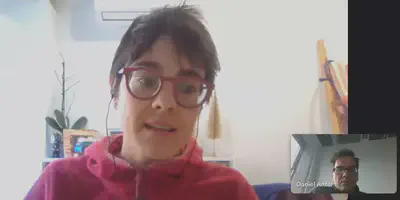
Esther Viñuela Lozano is the coordinator of the music entrepreneurship program of Reina Sofía Music School in Madrid. We met at the final conference of the MusicAIRE project. We started a conversation about joining forces with another MusicAIRE project, Eviota for Music, and working together on the Digital Music Observatory knowledge platform.
Esther, please introduce yourself to our blog readers. What is your professional background?
I was trained as a professional pianist and as a cultural manager later on. I was freelancing for years so I had to learn how to do my taxes and sell my services that ranged from concerts’ curation to social media management My experience has been developed both in academic institutions and in various sectors of the art industry, always with an educational, inclusive and transformative vocation.
What is your role in your school’s entrepreneurship program?
I coordinate the programme so I am in charge of the design of the subject together with the dean. I also teach project management and in the rest of the classes I act as a “translator” or mediator, as we often receive experts in different facets of business science whose knowledge is difficult for students to access, so I try to ensure that knowledge transfer takes place. I have been involved for five years in developing the curriculum for our future professional classical musicians to build their careers as musician-entrepreneurs.
Infobox: GreenME s the first environmental awareness program included in the academic curriculum of a High Education Music School. It offers an open conference, a training module and a project based on the “Learning by doing” methodology so that the students can experiment with their new abilities in a real context. It designed a training module for the students enrolled in the Entrepreneurship and Social Innovation programme subject.
Music Eviota is the minimum viable product of an open-source, open, data-driven ESRS-compatible, Scope 3 reporting school for music enterprises. It was developed by Reprex with the support of MusicAIRE, and it is continued in the WP3 Music Society, Citizenship, and Sustainability program of Open Music Europe, together with the European Music Observatory prototype.
What was your personal motivation for the GreenME project?
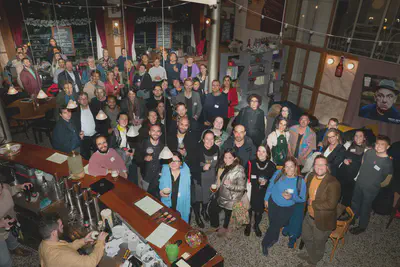
On the one hand there is the personal motivation related to the School and on the other hand there is the personal self-motivation. In relation to the first one, I like to consider myself as one of the few green spirits of the School, when I arrived 5 years ago I used to get angry with my colleagues when I saw them using spoons or single-use cups or when they didn’t use the recycling bins properly. As for myself, I confess that I suffer from summer anxiety, I have a hard time when heat waves arrive, and I am also a nature lover, I love hiking.. So why can people not see how we need to change our behaviour systemically? We have to be worried. We should be concerned individually, but it should lead to collective action. This is something we wanted to reflect on in the GreenME guidelines, and I was completely involved in the strategy of making them as well as the rest of GreenME project actions.
When I was younger, I was already very strict with myself regarding the amount of waste I was producing, which almost drove me crazy. So, at one point, I realised that if I could make my entire family change, then I make a bigger difference, and I would not have to torture myself to cut down on any other waste bag in the month. If I cannot convince my parents to change their behaviour to be more sustainable, who will I convince? So, a few years ago, I started to do a series of vlogs on my YouTube channel to give green tips.
I left the YouTube channel because it is a huge commitment to my personal time, and I realised that I cannot take all the load individually, and I should not go crazy while going to zero waste.
So you had a very personally involved. How did you get more systematic about it?
I teamed up with my school colleagues, the other green spirits. Amalia, my co-author, is the brains in the Green ME project, she laid the foundations of the project. Just like in my vlog, we set a target to convince more people to change. We targeted our educational community: more than 300 people, teachers, music students and staff. We designed an action funnel.
We organised a Green Week so what we did was to “invade” and “colonise” all the School’s screens and introduced a Five-day challenge to save the planet. We gave out actionable information in all channels and displays to increase awareness of the impacts of everything the community members do. We organised a conference where we informed them about climate change and sustainable development goals. We wanted to involve everybody.
.](/media/img/blogposts_2023/greenme_on_zenodo_hue1264ba22aa655b4dd58c9f8e98b55c0_177188_ebfccaa8aaad13ca295f323c07ae785a.webp)
Then we went further in the funnel and decided to target, more specifically, a smaller group, the 20 students in the Master’s program. We inserted the sustainable project management module in the curriculum, where we started to employ the business model canvas with green glasses on.
 from the [Digital Music Observatory Community Repository](https://zenodo.org/communities/music_observatory?q=&l=list&p=1&s=10&sort=newest).](/media/img/blogposts_2023/GreenME_2x1_crop_hu78a5a8a470a008345899dc4a0507952f_742857_228bc63a3e52fd201236f2409ce2ebee.webp)
When you make a project, you make many decisions. We taught them that they should be conscious about the planet with every decision they make. They should embrace the sustainability philosophy that is not only about the environment and trees. It is also about people; it is about social justice, qualities, and equity. We produced the guidelines to accompany this new module.
Do you already have experience with the impact your guidelines make?
No, the module was introduced first in the academic year that started this year [i.e., in 2023], in October. With these green glasses on, the students are preparing their projects now with their coaches. They are not necessarily green-aimed projects, but whatever projects they are planning, they apply these guidelines in the planning phase. They will start implementing projects using the guidelines in February 2024. So I can tell you more about the experience next May.
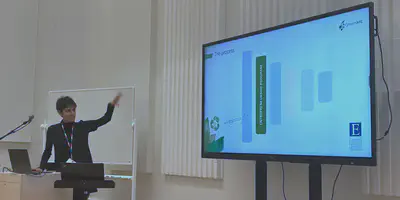
Do you have an incubator for entrepreneurial musicians?
We are in the process of launching an incubator. We do not have it yet; it will be launched in January 2024.
Can we ask you to become a data curator for the Digital Music Observatory to find better data and design more usable indicators for sustainable project management and controlling?
Measuring the impact of the entrepreneurship programme and incubator projects would be very interesting. How many zero-kilometre suppliers are hired, are local and small producers bought to spread the wealth, and is the energy used most efficiently? And, very importantly, what is the impact of these students’ actions in favour of sustainability? How do the public and the beneficiaries of these projects feel challenged and decided to change certain habits? Could we have simple, readable data that communicates what difference it would make within the same project if the decisions had been different? When projects are carried out, they make one decision, and we don’t know what the impact would have been if another decision had been made; I would like to have a mechanism for comparison to understand how much environmental impact a project may or may not have saved.

Esther Viñuela Lozano
Esther Viñuela Lozanois data curator for music entrepreneurs’ economic and sustainability indicators and knowledge.
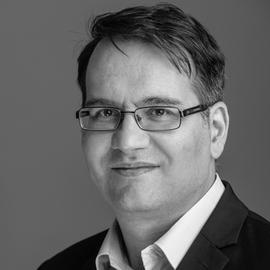
Daniel Antal
Data Scientist & Founder of the Open Music Observatory
Founder of the Digital Music Observatory and co-founder of Reprex.